


UNDERSTANDING PSILOCYBIN & MAGIC MUSHROOM RISKS
KNOWLEDGE EMPOWERS INFORMED CHOICES.
Before using any psychedelic substance, it’s important to understand both the potential benefits and the very real risks
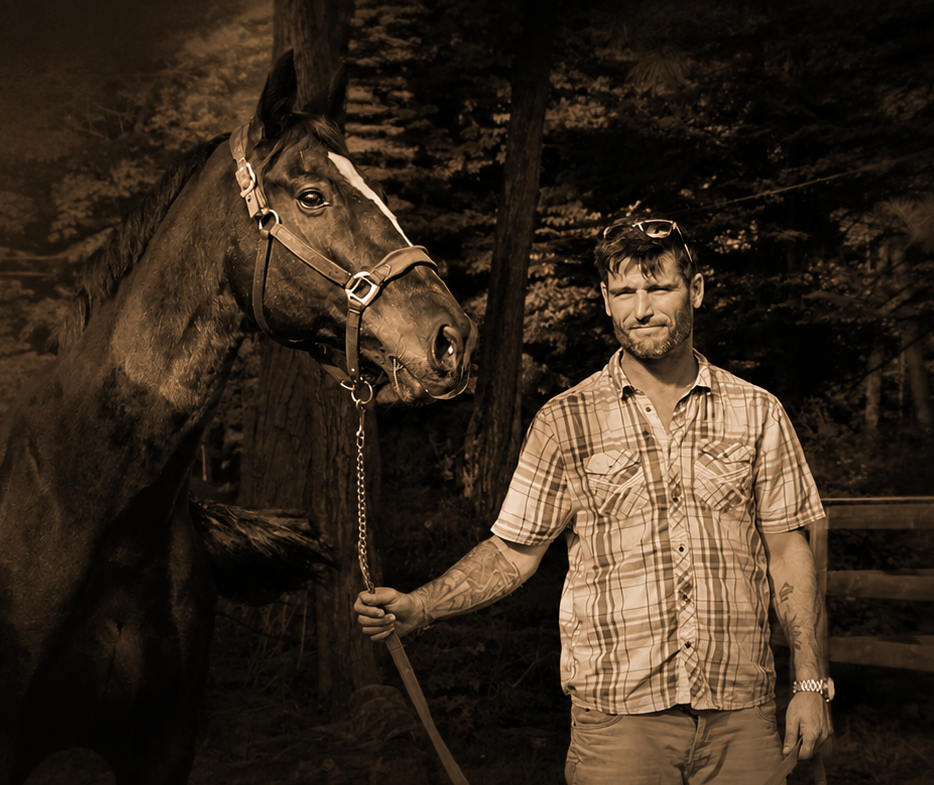
In the aftermath, we learned that Chance had experienced what is believed to have been a severe psychotic episode associated with psilocybin use.
In a matter of moments, the man we knew and loved became consumed by terror, confusion, and a complete break from reality.
Before this happened, we did not fully understand that psychedelic substances — even ones often described publicly as “natural” or “safe” — could carry the risk of extreme psychological reactions in certain individuals.
We are sharing Chance’s story because we believe more people need to understand these risks.
This website was created in his memory — not from anger, but from love, grief, and the hope that awareness may help prevent another family from experiencing this kind of heartbreak.
WHY THIS MATTERS

FOUR THINGS EVERYONE SHOULD KNOW
EVERY BRAIN IS DIFFERENT

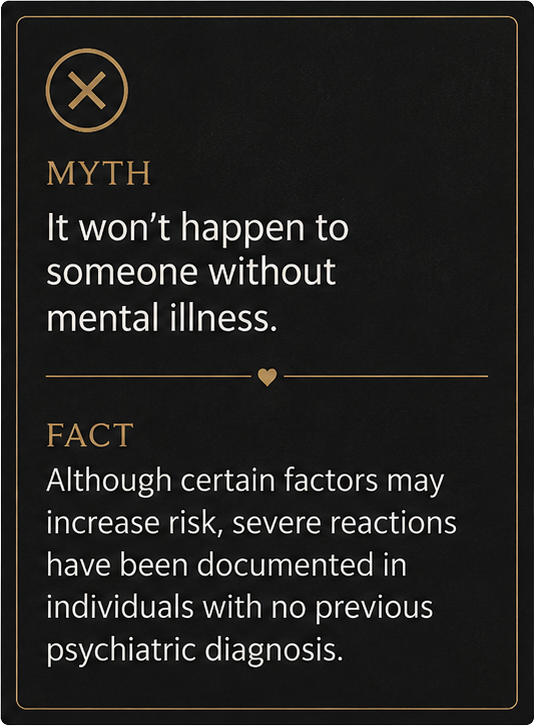
Individual responses to psilocybin can vary. Mental health history, genetics, emotional state, and environmental conditions may influence a person's experience, although serious reactions remain difficult to predict.
SEVERE REACTIONS CAN HAPPEN QUICKLY
Acute reactions can include intense fear, confusion, paranoia, or altered perceptions. Severe agitation, loss of contact with reality, or behaviour that threatens someone's safety requires urgent medical assessment.

ENVIRONMENT MATTERS
A person's surroundings and emotional state can influence their psychedelic experience. Unfamiliar settings, distress, lack of trusted support, and combining substances may increase the likelihood of a difficult or unpredictable reaction.

THERE IS NO GUARANTEED "SAFE" DOSE
Higher doses and greater potency can increase the risk of intense or adverse reactions. However, no dose guarantees a safe or predictable experience, even for someone who has used psilocybin before.
WHAT IS PSILOCYBIN?
Psilocybin is a naturally occurring psychedelic compound found in certain mushroom species.
After ingestion, the body converts psilocybin into psilocin, which acts primarily on serotonin receptors in the brain, particularly the 5-HT2A receptor.
Psilocybin can temporarily alter:
Perception and sensory experiences
Emotions and mood
Thinking and memory
Sense of time
Judgment and decision-making
Sense of self and surroundings
Effects typically begin within 20–60 minutes, although onset can vary. The acute experience generally lasts 4–6 hours, and some psychological effects or difficulties may persist longer.
POTENTIAL PSYCHOLOGICAL RISKS
Delusional thinking

Panic or intense fear
Agitation or aggression
Dangerous impulsive Behaviour
Distressing hallucinations
Severe anxiety
Disorientation or confusion
Impaired judgment
suicidal thoughts or self-harm
Reduced awareness of surroundings
Paranoia
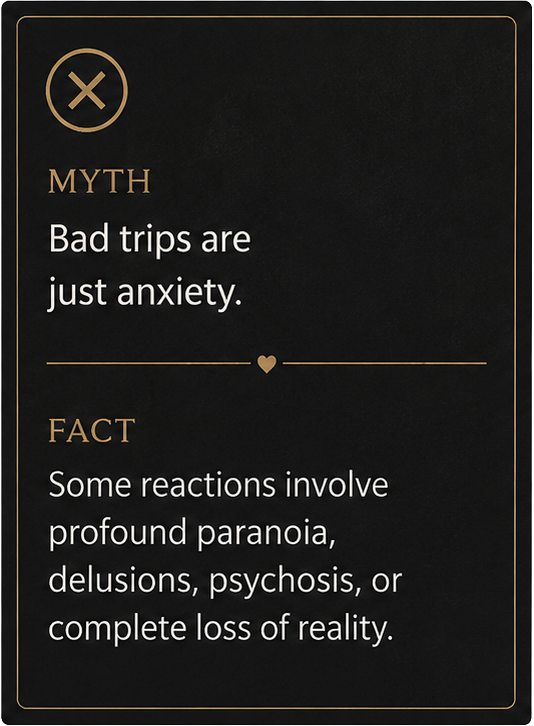
Loss of contact with reality
These reactions vary in severity and frequency. While some psychological effects are temporary, serious adverse reactions have been documented. The presence of these symptoms does not necessarily mean psilocybin caused them, and the likelihood of rare outcomes remains difficult to determine.
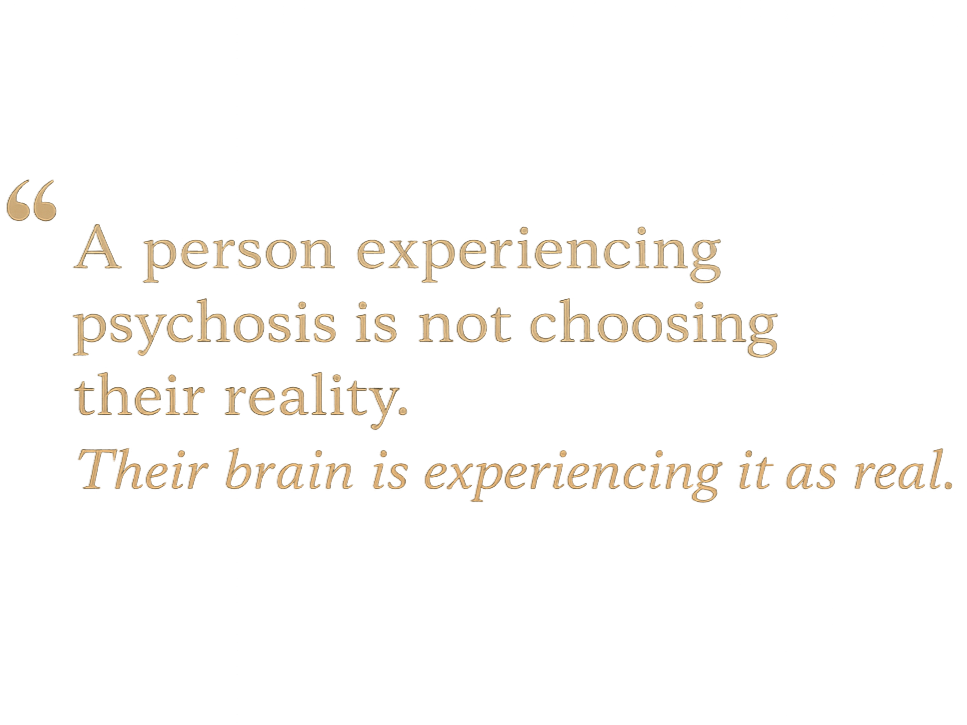
Psychosis is a state in which a person's perception or interpretation of reality becomes significantly altered. They may experience hallucinations, delusions, or difficulty distinguishing what is real.
Someone experiencing psychosis may:
Believe they are in immediate danger
Hear or see things others do not
Feel threatened, trapped, or persecuted
Misinterpret the actions of loved ones
Have difficulty distinguishing reality from their experiences
Behave in ways that are unusual for them
For families witnessing these experiences, the situation can be frightening and deeply distressing.
Not every difficult psychedelic experience involves psychosis, and psychosis cannot be diagnosed from unusual behaviour alone.
UNDERSTANDING PSYCHOSIS
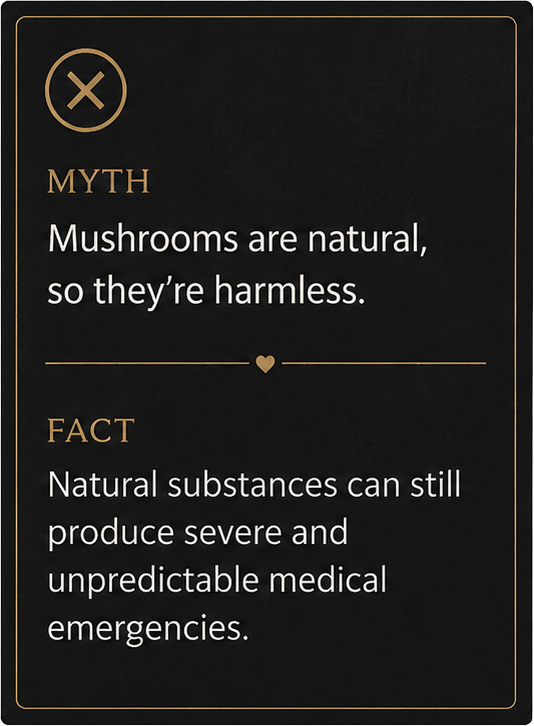
MYTHS VS FACTS
Every informed conversation has the potential to to protect someone.
By understanding the warning signs and recognizing when to seek help.
We can reduce harm and support those experiencing a mental health crisis with compassion.